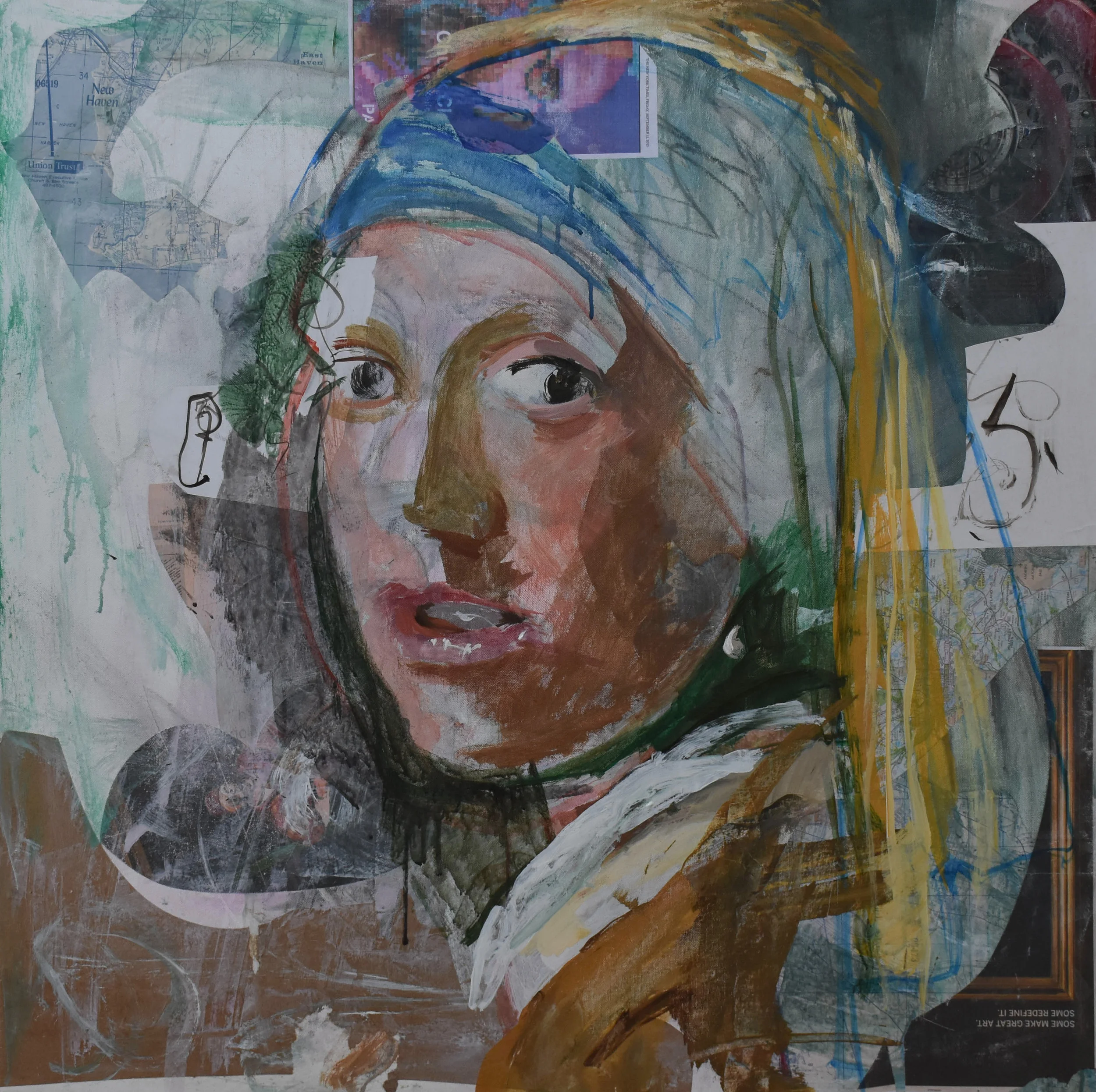
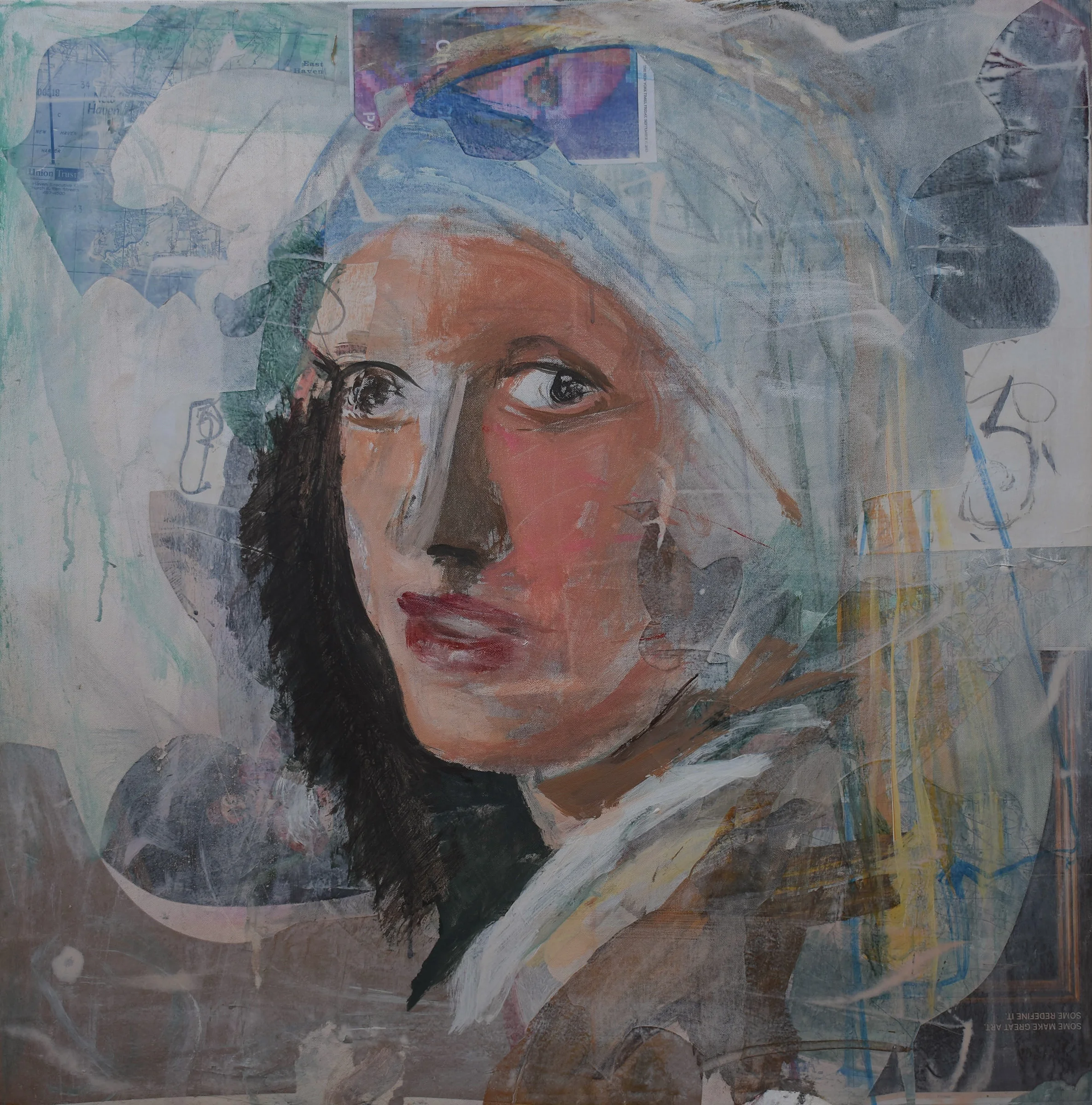
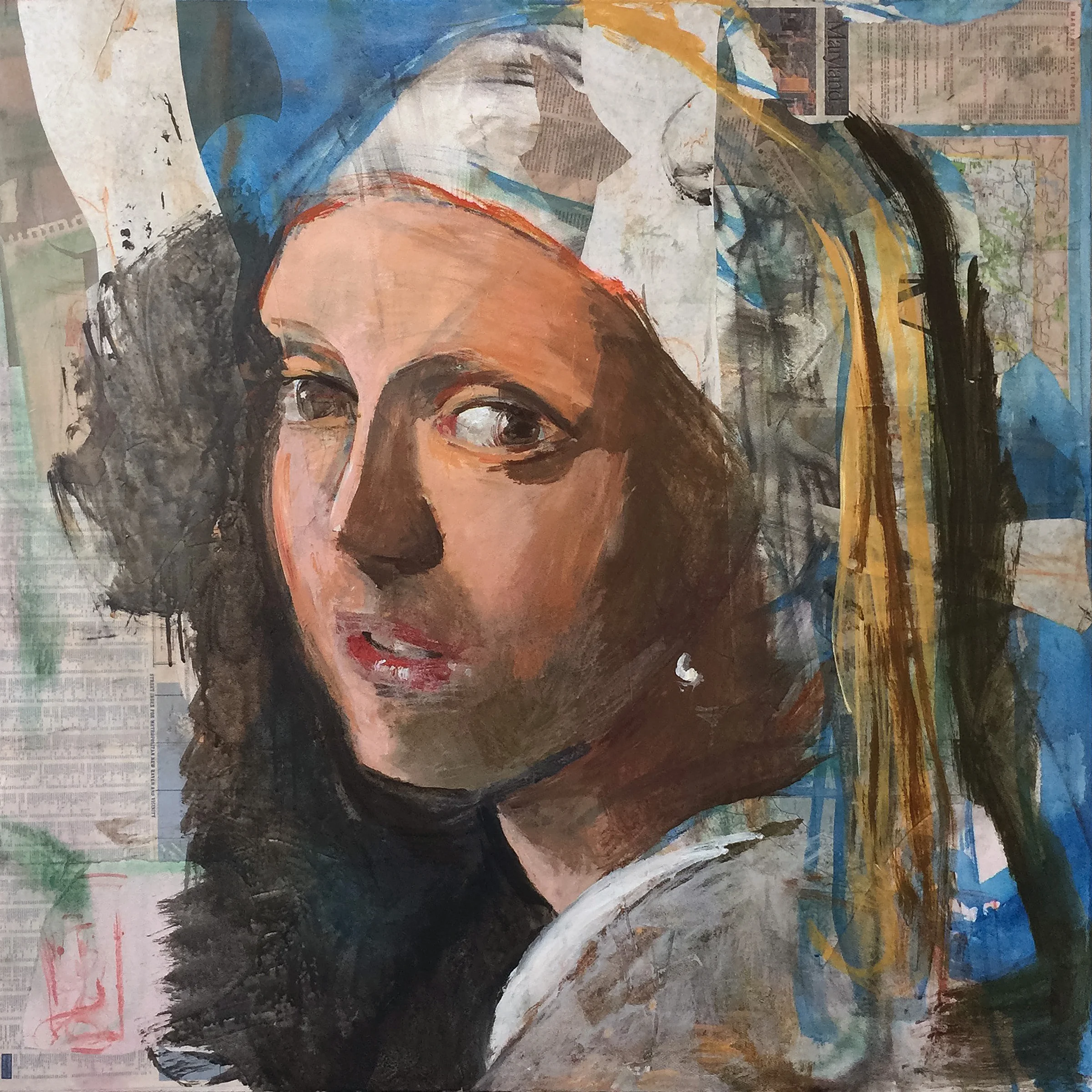
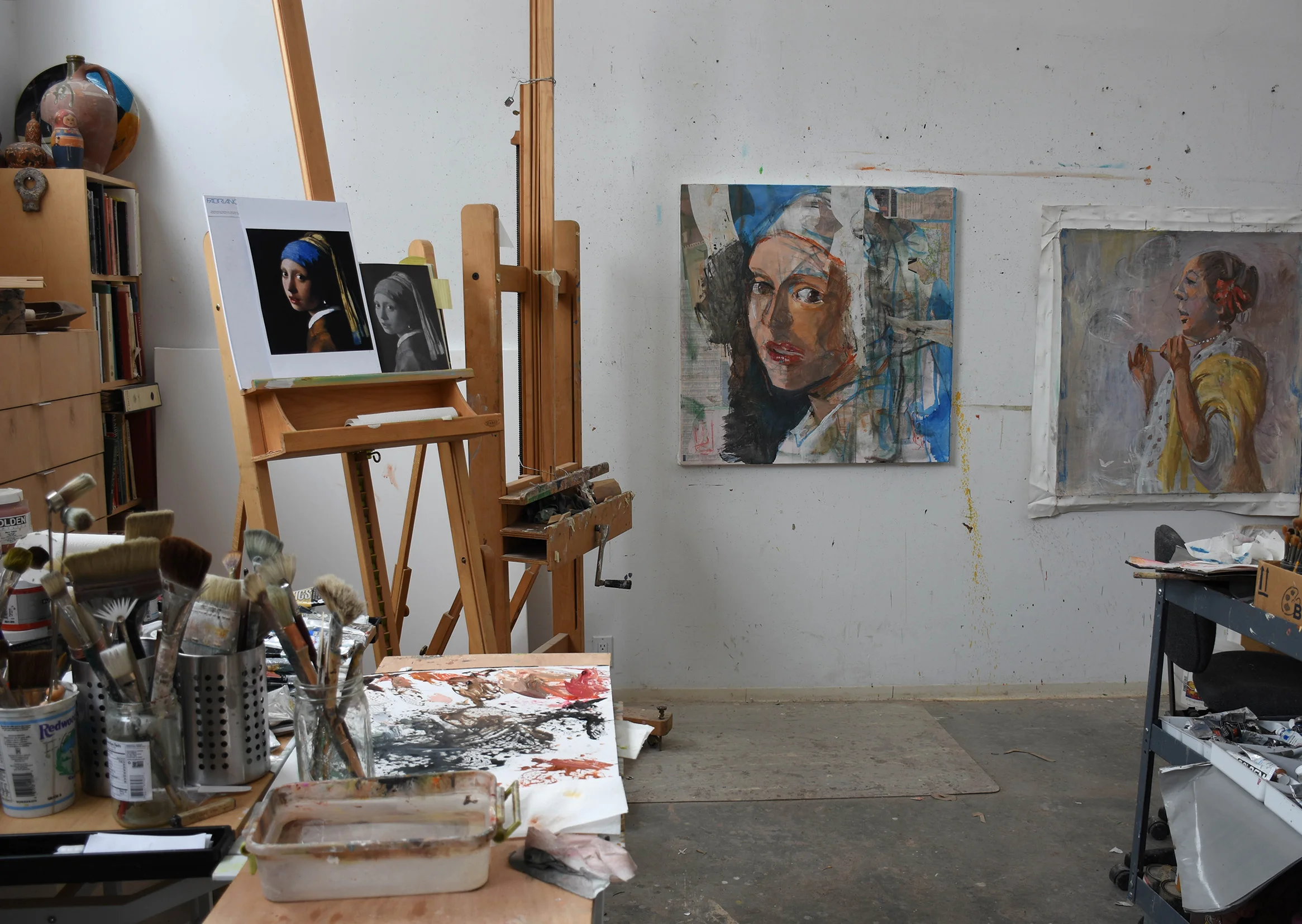
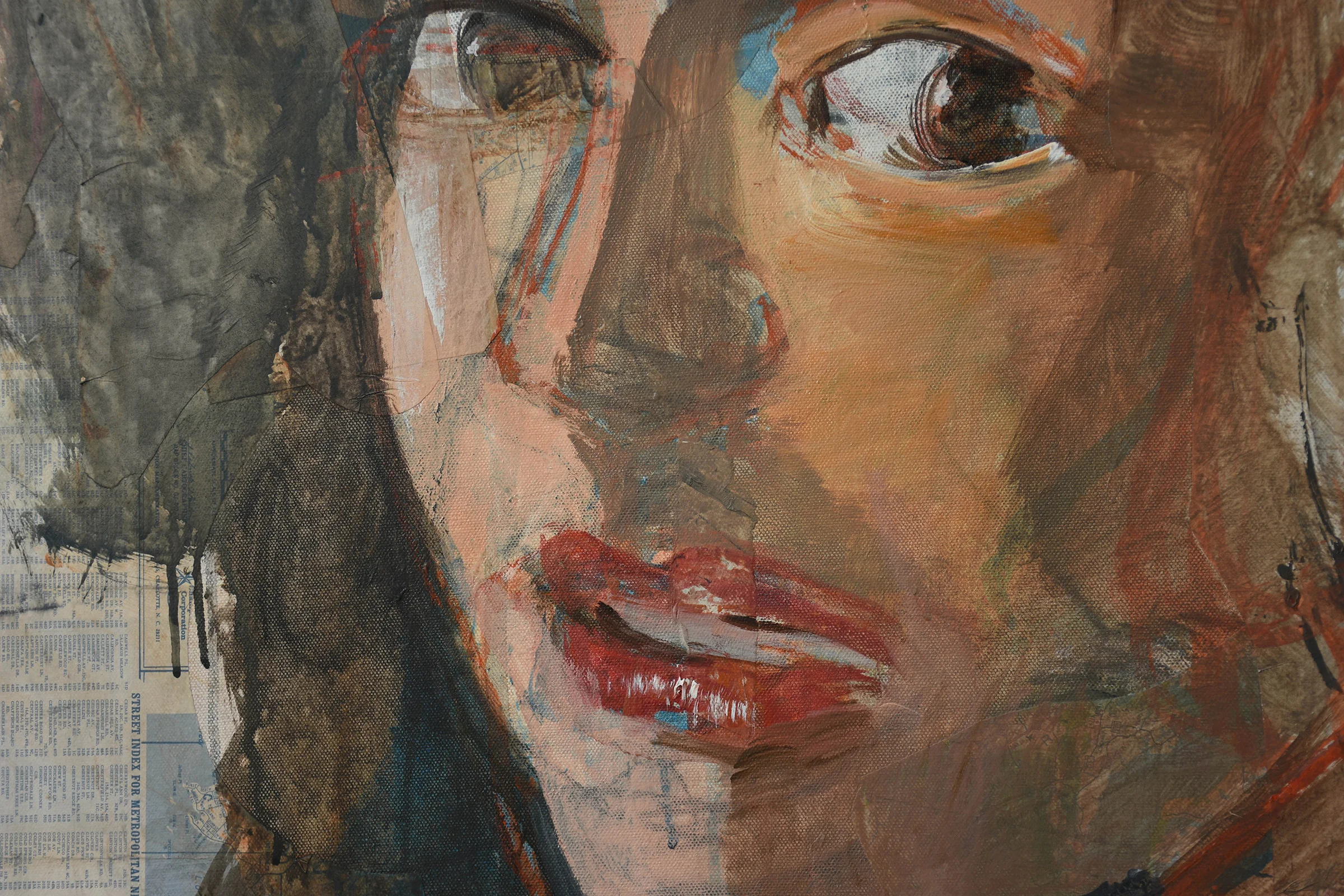
as for deKooning, he was the archetypal action painter. drips, scumbles, scraping were all part of his process, in which his entire body was engaged. but, as an artist who was classically trained in rotterdam, where he was born, there is always an element of refined, masterful draftsmanship underlying all the wild drips, slashes and scrapes. friends and admirers who saw a painting in process would urge him to leave it alone and not paint over it. not a chance. he painted over many gorgeous surfaces until he felt the painting was resolved. one story i love about deKooning has to do with how bits of newspaper ended up in his paintings. he liked to work wet into wet, so he started pressing newspaper pages onto the wet paint so that when he started working the next day, he could peel them off & work into the still wet oil paint. one day, he decided he like the look of the newspaper in the overall composition, so he left it.
in both of these examples, there is a balance of fortuitous accident and wild abandon resting on a foundation of classical training. i feel that my years in greece, where i learned from my friend and mentor yannis tsarouchis, and received the benefits of his deep understanding of the byzantine tradition, were my version of classical training.
my experience in nyc, before leaving for greece exposed me to the tail end of the abstract expressionist movement. i met some of the major players and absorbed their energy. that would be my last experience of art in america before my 15 years in greece.
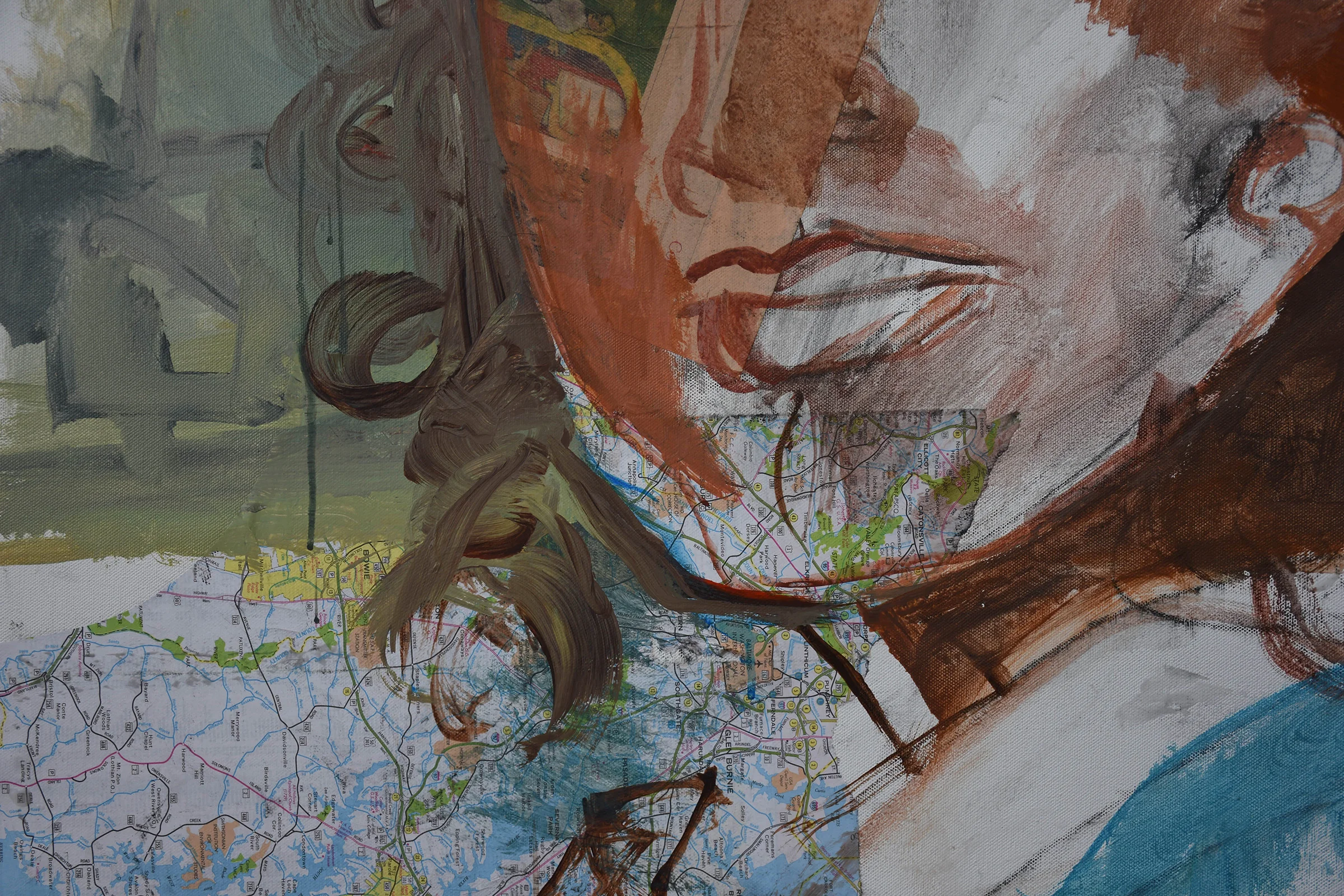
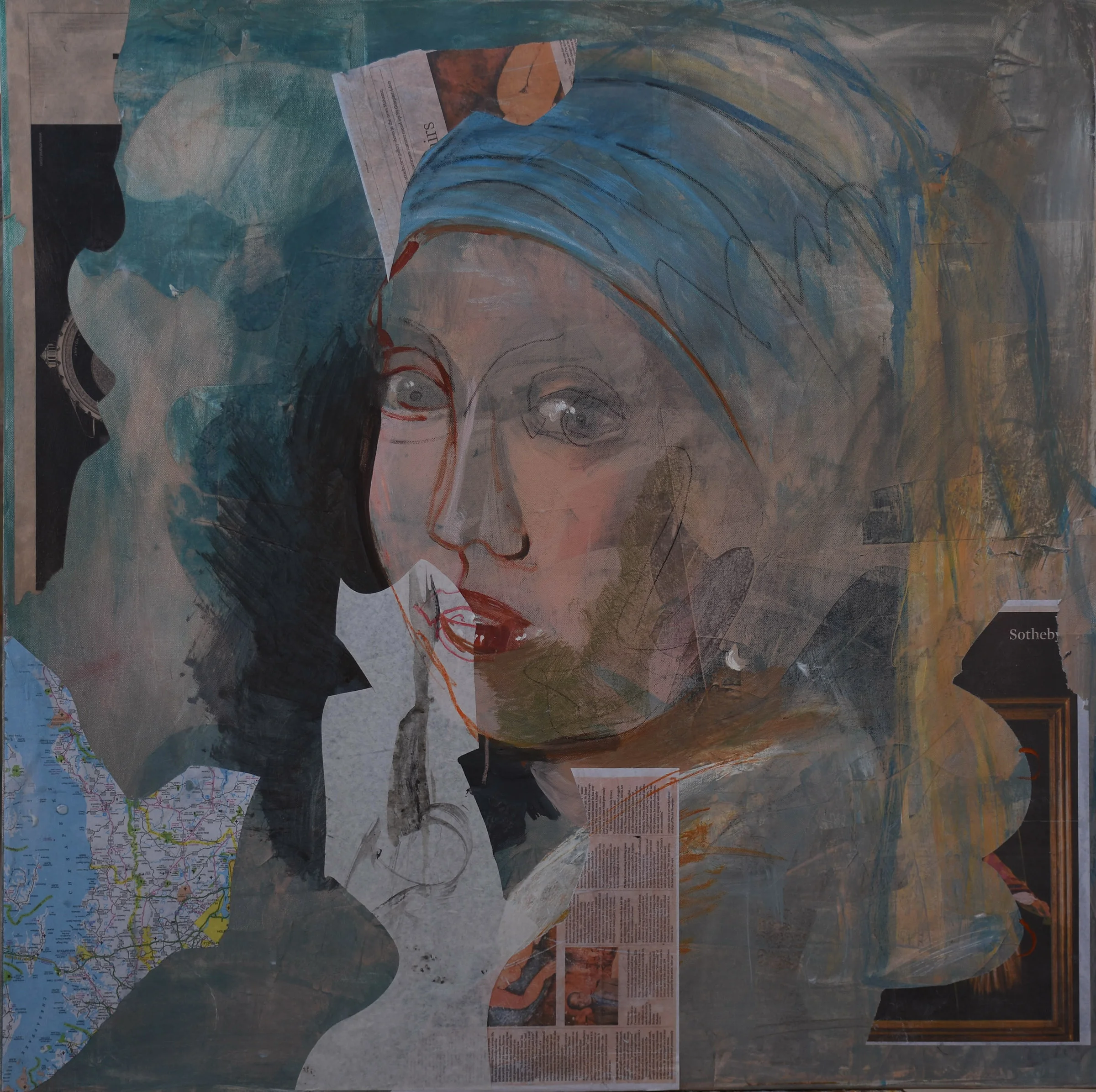
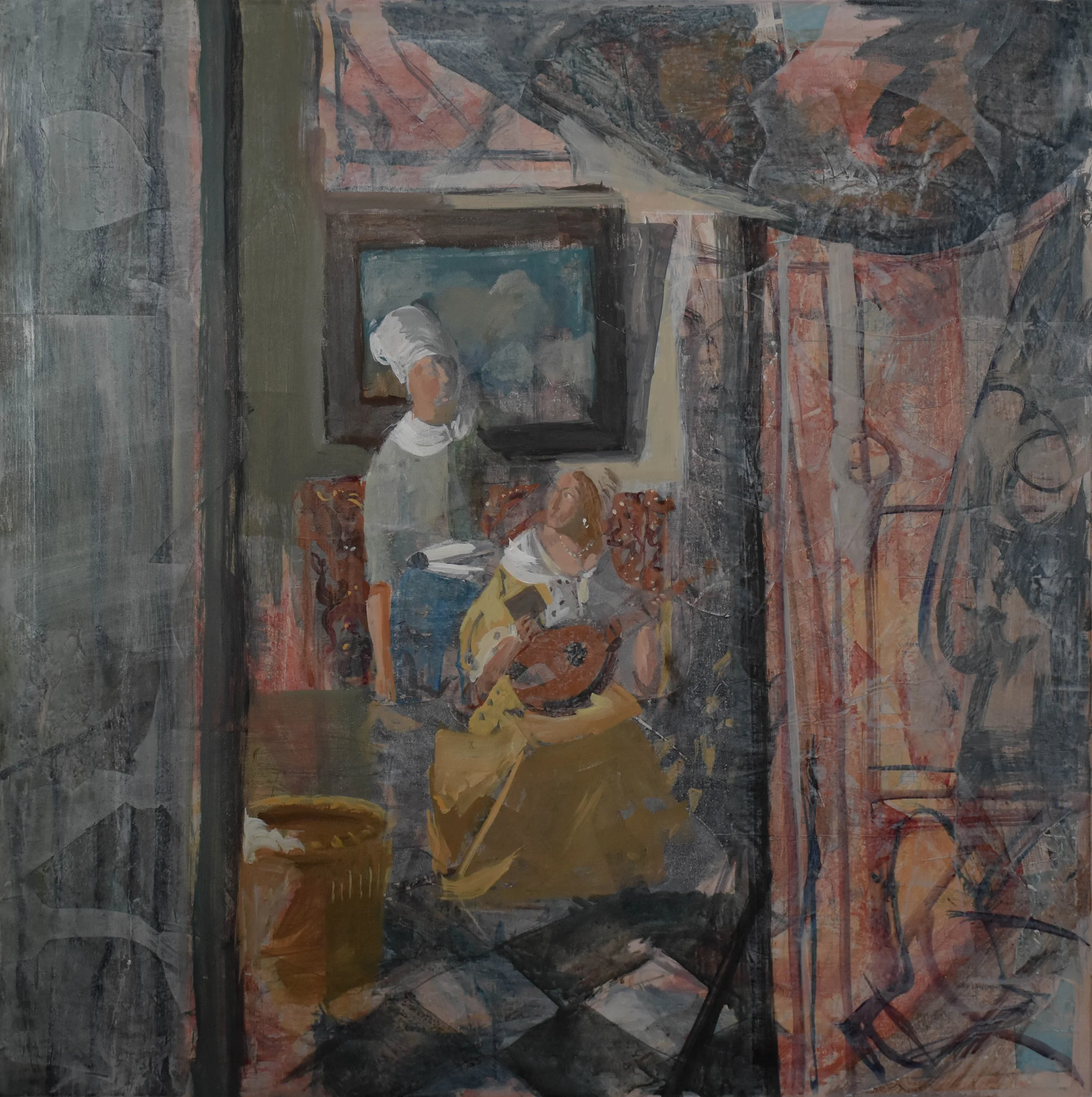
three or four years ago, i launched in to series of abstract paintings based upon plein air studies i had made at a nearby creek. it was a huge release. it was energizing and it was fun. but pure abstraction wasn't me. as soon as vermeer, one of my great heroes and a master of what might be called abstract realism, entered the picture, he became a point of reference for me to get wild and messy while still rooted in my classical training. that's all i have to say about that right now.