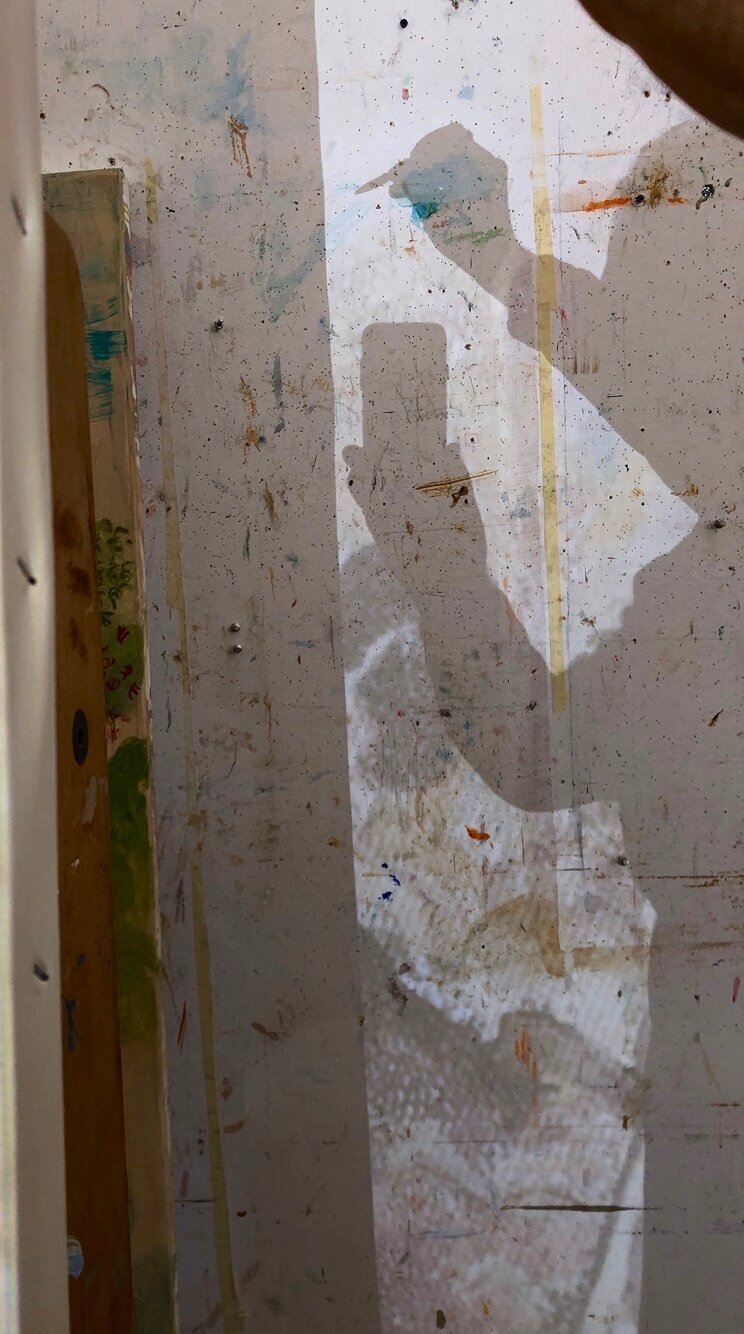
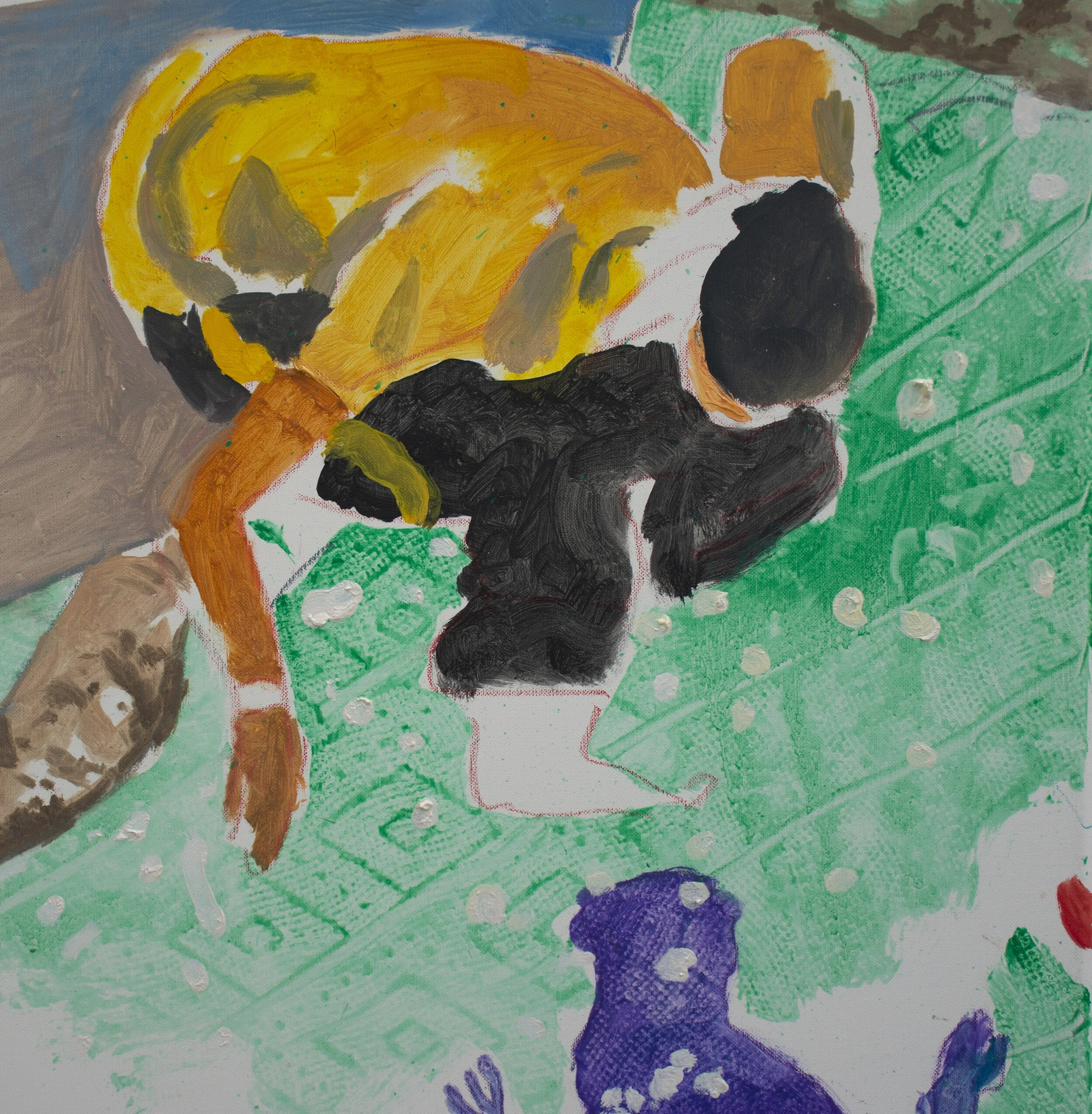
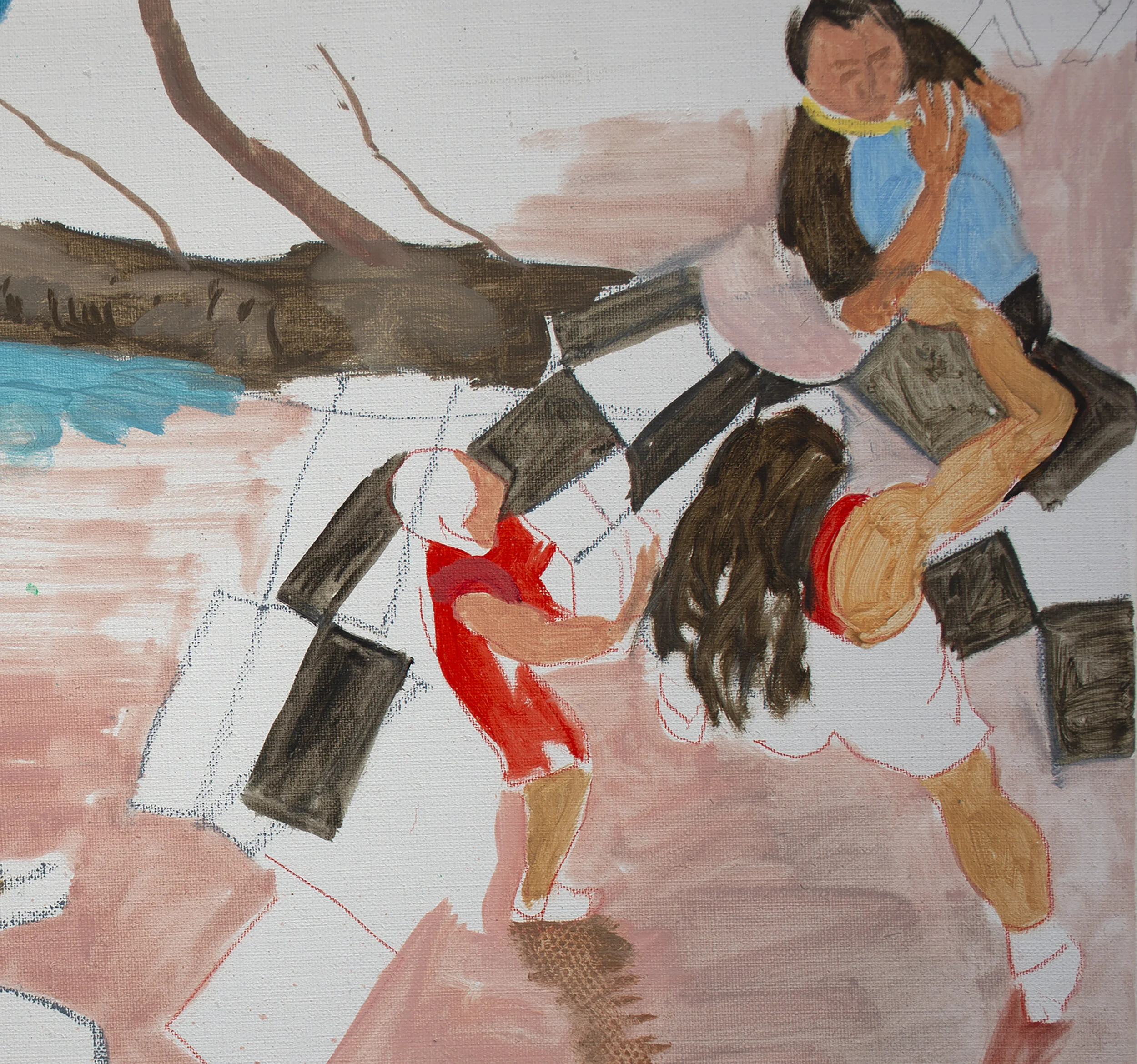
1:13 PM: just ran over to the house to bring mikela some of the oatmeal I made. when I returned, ii felt like flipping the painting 180°, so I did & I think it’s way better this way. that black belogs at the top. what do you think? leave a comment if you have an opinion.
so what happened here? why does scraping often prove so effective? once again, it has to do with the unplanned, the accidental, the unexpected.
by the way, I came across this INTERESTING INFORMATION ON MATISSE:
from Art as Life
The Matisse we never knew.
By Peter Schjeldahl
"Amélie and, later, Marguerite—a daughter Matisse had fathered with a shopgirl in 1894 and raised with Amélie—were strong-willed confederates of Matisse in his work, and severe critics when his concentration flagged, managing a virtual family firm of which the artist was both the fragile chairman and the slave-driven labor force. According to Spurling, “The family fitted their activities round his breaks and work sessions. Silence was essential.” Even during the years when Matisse lived mostly alone in Nice, an “annual ritual of unpacking, stretching, framing and hanging ended with the whole family settling down to respond to the paintings.” The conference might last several days. Then the dealers were admitted."
when I entered my studio this morning & glanced at 8/2/2021 creek oil, I said to myself, “no.”
more of a salad mix than a coherent and pleasing composition.
I made more marks, employing a yellow band and a blue band of color, ripping off what I did (successfully) a few paintings ago. nah.
so I grabbed my palette knife and began scraping the surface without regard for which precious passages I was obliterating. I knew in my gut that this is what needed to happen at this juncture.
so here’s where it stands as of a few moments ago. the two paddling figures are no longer 2 discreet entities. the orange/red mushroom shapes no longer stand apart, laughing at the rest of the painting.
ok, but why isn’t it just a messy, smudged up surface that used to be a coherent composition? ah, there’s where a knowledge of the history of art comes in handy. not saying i’m a brilliant light in that history. simply that it’s easier to understand and appreciate this stage of the painting if you’re aware of what’s happened in mark making since the stone age.